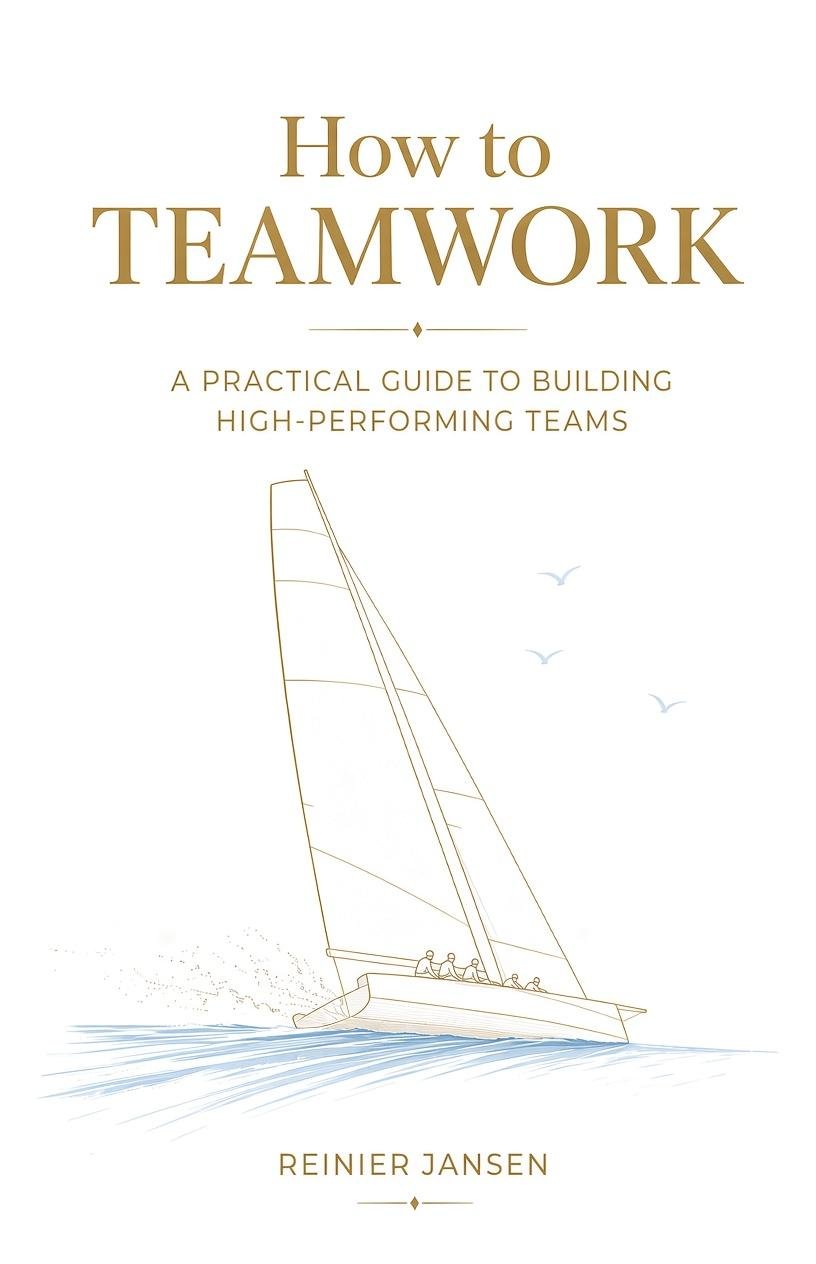
A practical guide to building high-performing teams
A talented group isn’t automatically a team.
Most teamwork advice tells you what good looks like — not what to do when your team doesn’t. This book helps you find which problem you actually have, and fix that first.
20 yrs
of teambuilding & training
14
chapters, read in any order
11
symptoms in the Diagnostic
How to read this book
Don’t read 14 chapters. Start with one question.
You have one team, one set of symptoms, and limited time. Skip straight to what matters — come back for the rest later, or never.
1
Ask the Gate Question
Ask each person separately: “What is our team’s goal, in one sentence?” Different answers? Go to Chapter 2.
2
Run the Symptom Scan
Mark only what you’ve actually seen in the last two to four weeks.
3
Fix one lever
Pick the symptom costing you the most. Read that chapter. Give it two to three weeks.
4
Re-run in a month
Symptoms shift once you fix the first one. That’s expected.
The Symptom Scan
Which of these have you seen lately?
Not generally — in the last two to four weeks. Each symptom points to a likely cause and the chapter to read first.
Symptom
Likely lever
Read
Same two or three people talk in every meeting; others stay quiet
Psychological Safety, or inclusion
Frequent “I thought you meant…” moments
Poor communication practices or missing documentation
People agree in the room, then don’t follow through
Artificial harmony — unresolved conflict avoidance
Decisions get re-argued after they’ve already been made
Weak structure, or conflict avoidance
Put it into practice
Reading this book isn’t the same as using it.
Start on your own, or bring in the team behind the book.
The book
Do it yourself
- The Diagnostic and Symptom Scan
- 14 chapters of stories and frameworks
- Exercises you can run this week
Pro Team Asia
Bring us in
- Professional facilitation
- Customized workshops
- Team development programs